Buying a new deck in White Rock
White Rock is built on a bluff above Semiahmoo Bay and had about 22,000 residents in the [2021 Census](https://www150.statcan.gc.ca/n1/daily-quotidien/220209/t004a-eng.htm). The town runs from the beach and the pier up a steep slope to the upland streets, and many homes sit on narrow lots with a view, a grade change and a mature tree or two. A deck here is a view project and an engineering project at the same time: the ground, the slope and the weather all shape what can be built and what it costs.
Permits and bylaw rules
The City's [General Guide for Applying for a Building Permit](https://www.whiterockcity.ca/DocumentCenter/View/251/Guide-for-Applying-for-Building-Permit-PDF?bidId=) lists the work that needs a permit, and it includes constructing, covering or enclosing a porch or sundeck, and building retaining walls over one metre high. Confirm with the City which documents it needs for your deck permit before finalizing the design.
For a deck proposed as part of a new single-family dwelling, houseplex or addition, use the City's [building permit checklist for those projects](https://www.whiterockcity.ca/DocumentCenter/View/246/Building-Permit-Application-Checklist---New-SFD-Houseplex-or-Addition). For those applications, the checklist calls for a geotechnical report with a Landslide Assessment Assurance Statement within the Geotechnical Assessment Area, and sealed shoring and excavation plans within that area or for deep foundation excavation. It also asks for deck details on the site plan and for the tree survey to show hardened surfaces such as existing decking, along with off-site trees within four metres of the lot boundary.
Lots, soil and climate
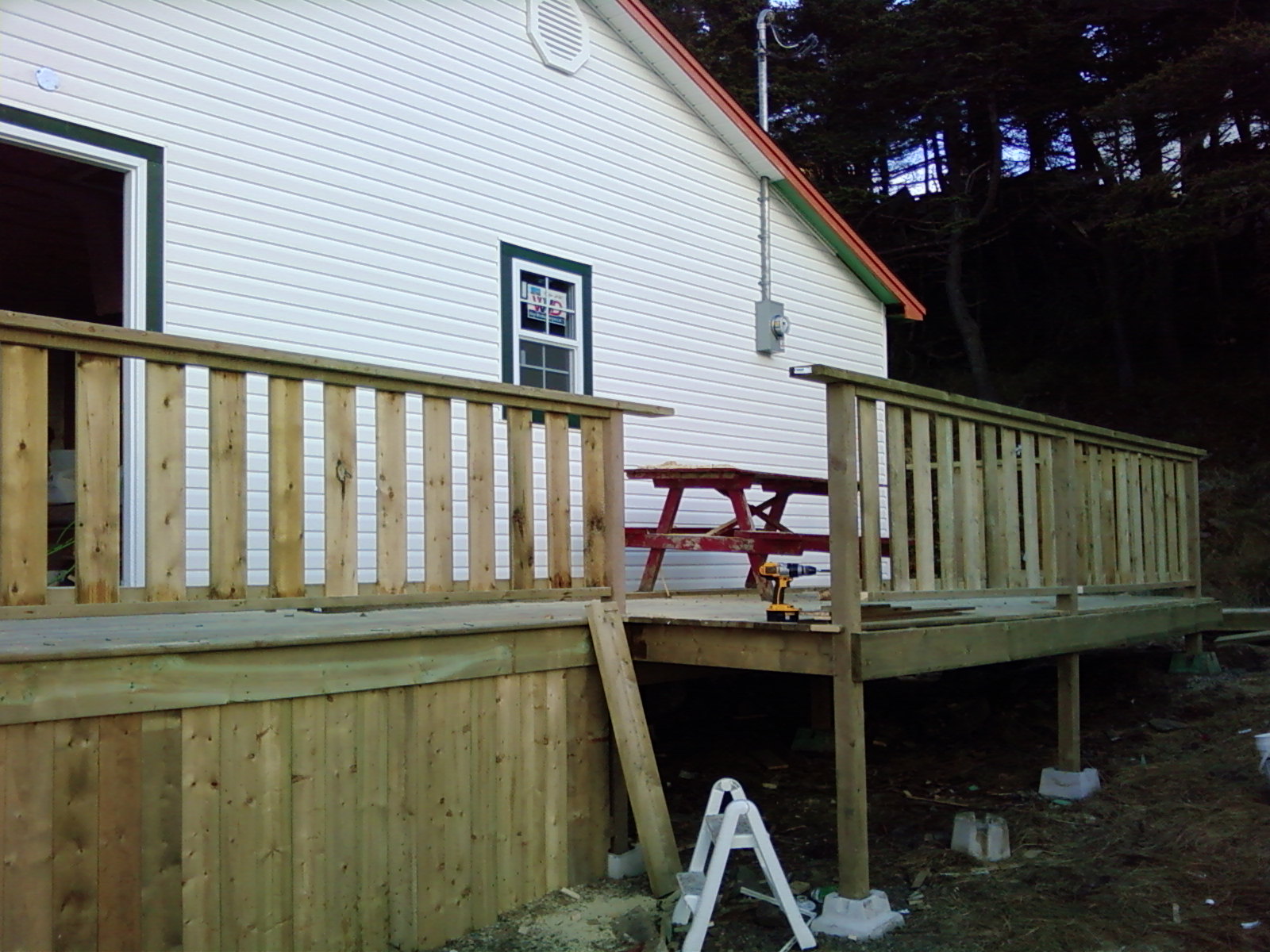
White Rock's lots are small, often steep, and frequently treed. The bluff and the slopes below it are the defining constraint: the City treats parts of the city as a geotechnical area, and building near a slope can require engineering, drainage control and erosion protection that a flat inland lot never sees. The climate is mild and coastal, with wet winters, a long dry summer and salt air off the bay. That combination is hard on a deck. Wind-driven rain finds every gap in the flashing, salt attacks ordinary fasteners, and the dry season shrinks and checks boards. Stainless or hot-dipped galvanized fasteners, good ventilation and a drainage path away from the slope are not upgrades here; they are the difference between a deck that lasts and one that does not. On bluff-top and view lots, height above grade, glass or cable guards and stairs carry much of the cost.
The season
Decks can be built here most of the year, but the reliable window is April through September, when the ground is workable and the wood can be finished dry. Spring and summer slots fill early, so quotes should be moving by late winter. Winter work is possible in the mild air but slower, with rain days and wet excavation around the footings and the slope.
What drives the price and what to ask
White Rock quotes swing on any geotechnical work the City requires for the project, height above grade and the guards and stairs it triggers, access on narrow streets and steep driveways, footing and drainage design on sloping ground, tree protection and arborist costs, demolition of the old deck, and the choice between pressure-treated, cedar and composite. Salt-air exposure and wind-driven rain make fasteners, flashing and ventilation real line items, not extras. On a small lot with no side access, staging and disposal add cost that a wide suburban lot never sees.
Ask each White Rock deck builder:
- Is my property inside the Geotechnical Assessment Area, and does the deck need a geotechnical or landslide assessment report?
- Will the work need shoring or excavation plans, and who arranges the engineering?
- How does the deck drain, and where does water go on my slope?
- What guard height and railing does my finished deck height require, and does a glass or cable guard need sealed design?
- Are the fasteners and flashing rated for salt air and wind-driven rain?
- Will the project need a tree survey, and is any work inside a tree's root zone?
- Is excavation a fixed price or an allowance if you hit rock, fill or groundwater?
- What does the written warranty cover — structure, labour and materials — and for how many years?